For many Australians living with disability, getting through the day involves tasks that others might take for granted – showering, preparing meals, getting dressed, or simply moving around the home safely. NDIS daily personal activities support exists specifically to help people with disability manage these everyday tasks with dignity, comfort, and as much independence as possible.
If you are an NDIS participant, a family member, or a support coordinator trying to understand what assistance is available under the National Disability Insurance Scheme, this guide is for you. We break down what NDIS daily personal activities includes, how NDIS assistance with daily life funding works, what support workers can help with, and how the right NDIS service provider can make a genuine difference to daily living in Sydney and across Australia.
What Are NDIS Daily Personal Activities?
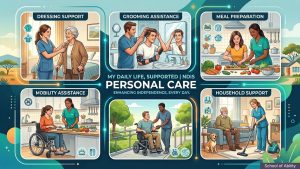
NDIS Daily personal activities are the practical, personal support provided to an NDIS participant to assist them to complete their daily activities that they are unable to complete independently because of their disability. These are the basic supports that ensure that people stay safe, healthy and functional every day.
This support category is referred to in the NDIS as Assistance with Daily Life and is a Core Support in a participant’s NDIS plan. This is one of the most frequent categories of support that is funded since it covers the everyday activities that are directly related to your disability.
Daily personal activities can include support in a range of living environments, including:
- The participant’s own home
- Shared living arrangements (such as Supported Independent Living or SIL accommodation)
- Respite care settings
- Community settings
The goal of NDIS daily personal activities support is not just to assist with tasks – it is also to help people with disabilities build confidence, develop life skills, and move closer to independent living wherever possible.
Understanding NDIS Assistance With Daily Life Funding
An NDIS plan has three categories of Core Support: Consumables, Social and Community Participation, and NDIS assistance with daily life. This type of funding is intended to help pay for the support worker to help the participant with personal activities and household tasks on an ongoing or regular basis.
Some key things to understand about this funding:
- Flexibility of Core Supports: In the majority of cases, the NDIS funding allocated to Core Supports can be spent in one of the sub-categories of Core, providing flexibility in how the funding is spent.
- The amount of funding you receive for daily personal activities is based on your individual need, which is identified through your NDIS plan through planning meetings and assessments based on your disability and support needs.
- Assistance with daily life must relate to your disability: NDIS assistance with daily life must relate to your disability, that is, support that you would not need if you did not have a disability.
- Support can be offered at any time: Support can be offered during the day, in the evening or even overnight depending on your needs.
It is important to have a planner or support coordinator to help you make sure your NDIS plan meets your needs for day to day living and that you receive the right level of NDIS support for your daily living needs.
What Support Is Included in NDIS Daily Personal Activities?
NDIS daily personal activities support includes a wide range of daily activities. The following is a breakdown of what can be part of your supports.
Personal Care and Daily Personal Activities
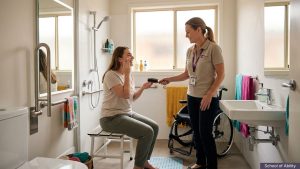
Personal care is the focus of daily personal activities. Support workers can help with:
- Bathing, showering and grooming
- Oral hygiene and dental care routines
- Dressing and undressing
- Toileting support and management of bowel and bladder function
- Nutrition and feeding, including the feeding of infants and children with special dietary requirements
- Transfers and positioning (bed to wheelchair etc)
This support is provided in a way that respects the privacy, dignity and respect of the person. Good support workers will be trained to help with personal care while encouraging the participant to do as much as they are comfortable doing, to support their independence not dependence.
Household Tasks and Everyday Living Support

One of the key areas of the NDIS daily personal activities support is household activities. NDIS support for daily life may include support with everyday activities around the home if your disability makes it difficult for you to do these activities on your own, such as:
- Cleaning and tidying living spaces
- Changes of laundry and linens
- Purchase and oversee food and household items
- The ability to organise and manage the home environment.
- Assisting with bill management or correspondence (under the direction of a support coordinator)
For participants in shared living arrangements, household task support may be shared among housemates, with each person’s NDIS plan contributing to the overall support package.
Meal Preparation and Daily Routines
Support workers can assist participants with meal preparation and nutrition as part of their daily personal activities support. This can include:
- Planning and preparing nutritious meals
- Assisting with feeding where required
- Managing dietary needs, allergies, or medical nutrition requirements
- Supporting participants to learn cooking skills as part of capacity building
Daily routines are also a critical part of this support. Establishing consistent morning and evening routines helps participants feel safe, organised, and in control of their daily life. Support workers help participants follow these routines while encouraging as much independence as possible.
Mobility and Community Access Support
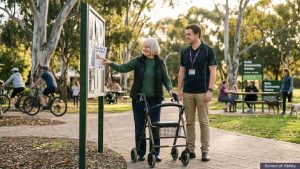
Some NDIS participants require assistance with mobility and transport as part of their daily personal activities. Support under this area may include:
- Assisting with mobility aids such as wheelchairs and walking frames
- Helping participants access transport to appointments, social activities, or community events
- Providing accompaniment and support during community outings
- Assisting with disability care during travel and community engagement
For participants in Sydney, support workers can assist with navigating public transport, accessing community venues, and supporting community participation as part of a well-rounded support plan.
How Support Workers Help NDIS Participants Build Independence

One of the most important aspects of NDIS daily personal activities support is the role it plays in helping participants build independence over time. Great support workers do not simply complete tasks for participants – they work alongside them to develop skills, build confidence, and reduce reliance on support wherever possible.
Here is how a skilled support worker approaches this:
- Teaching life skills: Support workers can assist participants in learning how to perform daily tasks themselves – whether that is cooking a simple meal, doing their own laundry, or managing a morning routine independently.
- Using prompts and guided assistance: Rather than taking over, support workers use verbal prompts, demonstrations, or partial assistance to encourage the participant to do as much as they can on their own.
- Setting goals: Support workers work with participants and their support coordinators to establish realistic goals for independence to be achieved in a realistic timeframe in keeping with the capacity building goals in the participant’s NDIS plan.
- Monitoring progress: Progress is tracked and communicated to support coordinators and families to ensure supports change as the participant’s skills and needs change.
- Supporting emotional wellbeing: Daily personal activities support is not just physical. Support workers offer companionship, encouragement and emotional support to help participants feel capable and valued.
This is the vision of the NDIS, to not only provide funding for disability supports but to enable people with disability to live the life they want.
Benefits of NDIS Personal Care Support for Daily Living
The benefits of NDIS personal care support go far beyond the ability to undertake everyday activities. Well delivered daily personal activities support leads to:
- Improved health and wellbeing: Personal care is provided regularly, which helps to prevent health problems like pressure sores, infections, or poor nutrition.
- Greater sense of control: Participants with reliable support for daily activities have more sense of control over their lives and living environments.
- Reduced carer burden: Family members and unpaid carers are very grateful to know that their carer has professional support. Respite care can also be of benefit, providing carers with a break as the participant is well supported.
- Social connection: Many participants benefit from support with community access and social activities, which helps to decrease isolation and enhance mental health.
- Confidence and self-esteem: New life skills and increased independence leads to increased confidence and self-esteem.
- Smoother stage transitions: Daily personal activities support helps manage significant life changes such as smoother stage transitions, from the family home to shared living or from school to adult services.
Can NDIS Daily Personal Activities Support Independent Living?
Absolutely. One of the critical supports that allows individuals with a disability to live independently is NDIS daily personal activities support. Having the appropriate daily living support is the key for many participants to live in their own home instead of residential care.
NDIS assistance with daily life can support independent living in several ways:
- Providing just the right amount of support – no more, no less – so participants can manage their own home
- Building skills that reduce how much support a participant needs over time
- Enabling people with complex support needs to live independently with high-intensity support, rather than in institutional settings
- Supporting participants in shared living arrangements where independence and community are balanced
The NDIS also provides funding for higher level supports, such as nursing care or community nursing care, which are in addition to everyday personal activities and are available to support people who need more intensive support.
Daily personal activities support is at the heart of enabling a participant to live independently in their own home, shared living or transitioning between living situations.
What Is Not Usually Covered Under NDIS Daily Personal Activities?
Participants and families should also be aware of what is not usually funded by the NDIS for daily personal activities, to ensure they have realistic expectations.
The following are generally not funded under NDIS assistance with daily life:
- Tasks not related to your disability: If a household task is something the person could reasonably do themselves without disability-related barriers, it may not be funded.
- Aged care services: The NDIS funds support for people with disability below pension age. Participants who turn 65 transition to aged care supports rather than continuing to use NDIS funds for daily personal activities.
- General palliative care: While the NDIS may fund supports related to a participant’s disability during palliative care, general palliative care services are typically funded through the health system.
- Medical treatment: Day-to-day medical treatment and nursing care that falls within the health system’s responsibility is not funded by the NDIS.
- Family member salaries: In most circumstances, NDIS funds cannot be used to pay a family member who lives with the participant to provide daily personal activities support (though there are limited exceptions).
If you are unsure whether a specific support can be funded under NDIS daily personal activities, speak with your support coordinator or NDIS planner for guidance.
How Daily Personal Activity Supports Fit Within NDIS Core Supports
Understanding where daily personal activities sits within the broader NDIS funding structure helps participants make the most of their NDIS plan.
NDIS Core Supports is one of the three main funding categories in an NDIS plan (alongside Capital Supports and Capacity Building Supports). Within NDIS Core, there are four sub-categories:
- Assistance with Daily Life: This is where daily personal activities sit, covering personal care, household tasks, and living support.
- Transport: Funding to help participants travel to work, education, or community activities.
- Consumables: Everyday items such as continence aids and low-cost assistive technology.
- Assistance with Social and Community Participation: Support to engage in social activities and the community.
Because NDIS Core is generally flexible, participants may be able to shift funds between these sub-categories based on their changing needs – subject to the rules in their NDIS plan.
Daily personal activities support complements the capacity building supports in a participant’s plan, particularly the Improved Daily Living category, which funds therapy services, skill development, and training that help participants manage their own daily life with greater independence.
Choosing the Right NDIS Service Provider for Daily Living Support in Sydney

One of the most crucial decisions a participant or family will make is selecting the right NDIS service provider for daily personal activities. The quality of support can have a huge impact on everyday life, wellbeing and long term outcomes.
When assessing Sydney care providers for daily personal activities support, take into account:
- NDIS registration: Make sure the provider is registered with the NDIS and is approved to provide the support you require.
- Experience and expertise: Seek out providers who have the experience and expertise in disability support daily activities and have knowledge of the type of disability or need.
- Participant-led approach: The best care providers engage participants in decisions on their own care and support, taking into account their preferences, goals and living arrangements.
- Consistency of support workers: Many participants are sensitive to the consistency and familiarity of support workers and this is particularly important for the support worker to be consistent in their support for the person’s daily personal activities.
- Cultural sensitivity: It is important for care providers to be sensitive to and respectful of cultural backgrounds and communication preferences in Sydney’s diverse communities.
- Transparent communication: Select a provider that is able to communicate clearly with participants, families and support coordinators and responds promptly to changes in needs.
It is also worth asking prospective NDIS service providers how they approach capacity building within daily personal activities – whether they actively work to build independence, or simply complete tasks on behalf of participants. The right provider will also understand how to work within different NDIS plans and adjust their approach based on each participant’s funded budget and goals.
How School of Ability Supports Participants With Daily Personal Activities
Living a full, meaningful and independent life is at the heart of what we do at School of Ability to support people with disabilities. School of Ability is an NDIS registered service provider for participants throughout Sydney and beyond, and provides NDIS daily personal activities support that is personalised, respectful and truly focused on the goals of each participant.
School of Ability’s approach to daily personal activities support is as follows:
Person-centered planning: We work closely with each participant, their family and their support coordinator to understand their daily living goals, preferences and their NDIS plan to create support that is a good fit for their life.
Skilled, compassionate support workers: Our support workers are skilled and compassionate, and are matched to participants according to compatibility and experience, and trained in disability support daily activities and capacity building.
Life skills development: Life skills are integrated into the daily life skills activities support, as appropriate, to help participants become more confident and move towards independent living at their own rate.
Flexible support arrangements: School of Ability offers flexible support arrangements, which can be adapted to changing needs, such as assistance in the morning, overnight care and in shared living environments.
Community engagement: We assist participants to become involved in community activities, events and social and community participation as part of a holistic daily living plan.
Regular reviews: Thoroughly track participant progress and adjust support plans as goals are met and needs change, so that participants are supported appropriately throughout the transition process.
Conclusion
NDIS daily personal activities support is an important part of enabling people with disability to live their life with dignity, safety and increasing independence. This support can help people with disabilities achieve the things they want to do in their personal care, household, community and life skills.
If you are just starting your NDIS journey, changing providers or supporting a family member to manage their day to day personal activities supports, the key is to find an NDIS service provider who understands your needs and is dedicated to your goals.
We are proud to provide professional, compassionate and goal-focused daily personal activities assistance to people with disabilities throughout Sydney at School of Ability. Please give us a call today and see how we can help you or a loved one live independently, gain confidence and flourish.
Frequently Asked Questions
What is the difference between NDIS daily personal activities and NDIS assistance with daily life?
These terms are closely related. NDIS assistance with daily life is the official name of the Core Support funding category in your NDIS plan. NDIS daily personal activities refers to the specific types of tasks - such as personal care, household tasks, and meal preparation - that are funded under that category. In everyday language, the terms are often used interchangeably.
How do I get NDIS funding for daily personal activities?
If you have met with the NDIA after your planning meeting, funding for daily personal activities will be included in your NDIS plan. In this meeting you will talk about the supports you require that are associated with your disability. Bringing documentation from GP, allied health professionals or support coordinator is helpful. A plan review is available if you feel your current plan is not meeting your daily personal activities needs.
Can NDIS daily personal activities support include overnight care?
Yes. For participants who require overnight care due to their disability - such as those who need assistance during the night with repositioning, personal care, or safety monitoring - overnight care can be funded under NDIS assistance with daily life. This is determined based on your assessed support needs and included in your NDIS plan.
Can NDIS funds for daily personal activities be used for shared living arrangements?
Yes. NDIS daily personal activities support can be delivered in shared living arrangements, including Supported Independent Living (SIL). In these settings, support workers often assist multiple participants, and each participant's NDIS plan contributes to the shared support arrangement. Funding amounts are individualised based on each participant's specific needs.
What is the role of a support coordinator in managing daily personal activities?
A support coordinator supports participants to understand and implement their NDIS plan, such as daily personal activities supports. They can assist you to identify and connect with NDIS service providers, understand changes to your plan, and ensure supports are effective. Having a skilled coordinator can make a difference to the quality of your daily living support if you have plan funding for support coordination.
Can daily personal activities support help my family member live independently?
Yes – this is one of the main purposes of NDIS daily personal activities support. Support workers can help people with disabilities live in their own home or shared living environment, instead of in a more restrictive environment, by helping them with daily activities. Many participants are able to become more independent over time with the appropriate level of support, life skills development and capacity building.