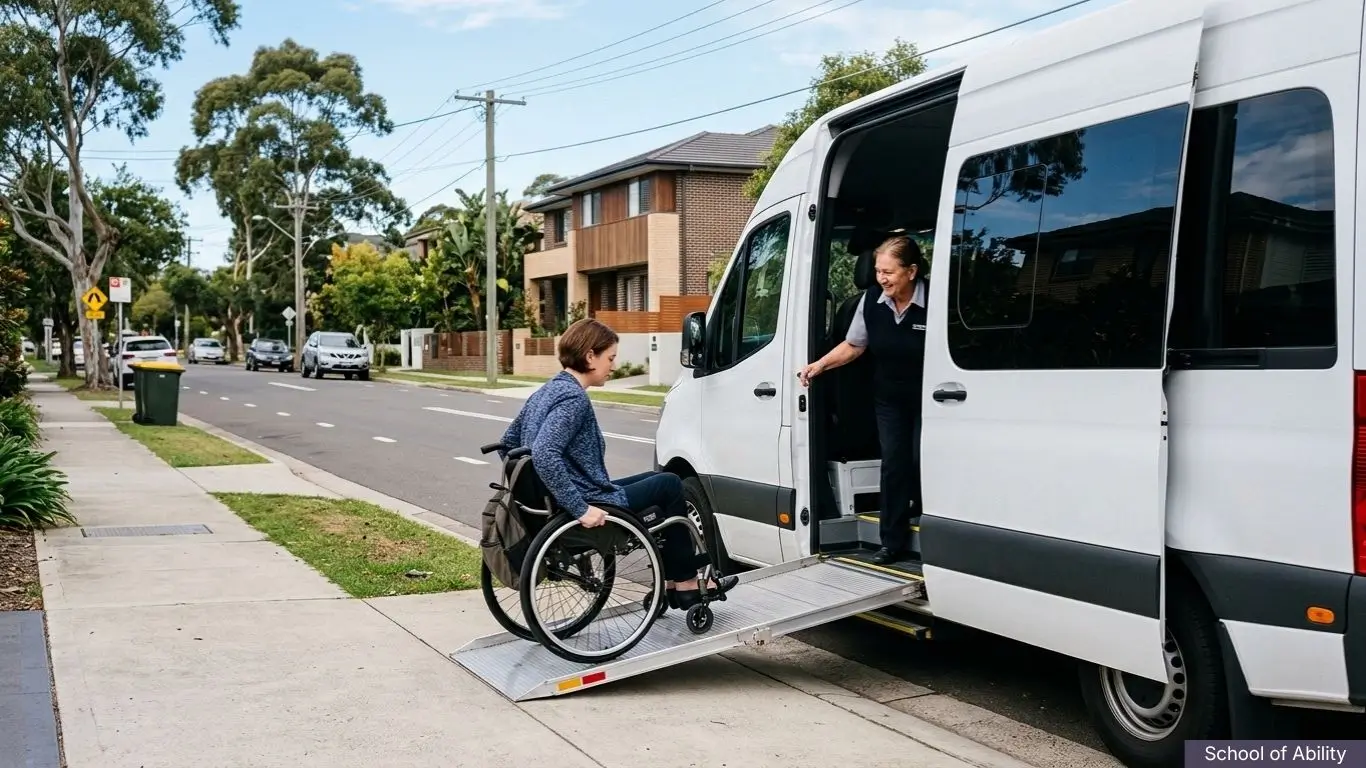
Getting to work, an appointment or a community activity should not be a logistical puzzle. But for many Australians living with disability, transport is a genuine and daily challenge, particularly when using public transport independently, as it is not possible because of their disability.
NDIS transport assistance may help eligible participants access employment, education, healthcare and community activities. This article explains what is covered, how the three NDIS transport levels work, what you can and cannot claim, and how to navigate the process, with specific information for participants in Greater Sydney.
Note: NDIS funding rules, transport levels, and amounts can change. Always verify current figures against the latest official NDIS guidance before making decisions about your plan.
What Is NDIS Transport Assistance?
NDIS transport assistance is funding that may be included in an eligible participant’s plan to help them travel to places and activities that support their disability-related goals.
The NDIS recognises that for some participants, the inability to use public transport independently creates a real barrier to work, study, community life and essential services.
Transport funding is designed to address that barrier, but it is not a blanket entitlement. It is assessed individually, taking into account a participant’s goals, disability, and whether other transport options (such as family support or state-based schemes) are already available.
What Can NDIS Transport Funding Cover?

If part of a participant’s plan, transport funding could include:
- Transportation to and from the event when a participant is unable to take public transportation (e.g., taxi or rideshare)
- Private vehicle travel (in some circumstances)
- Travel to and from work or school.
- Attend day programs, appointments, or community activities
- Social and recreational travel related to disability objectives
Two concepts important to be aware of:
- Participant transport funding: funds in your plan for your own transportation.
- Provider travel costs: a separate cost a provider can claim if a worker has to travel to provide a support to you. This is not your transport funding.
The NDIS does not fund ordinary everyday travel, personal holidays, or general transport services that do not relate to a person’s disability.
NDIS Transport Levels: Level 1, Level 2 and Level 3

The NDIS uses three transport support levels to determine how much recurring transport funding a participant may receive.
| Level | Who it may apply to | Current annual amount | Typical purpose |
| Level 1 | Participants not in work, study, or day programs, but seeking greater community access | $1,784 | Community access |
| Level 2 | Participants working or studying part-time, attending day programs, or engaging in social or recreational activities | $2,676 | Part-time participation |
| Level 3 | Participants working or studying at least 15 hours per week and unable to use public transport | $3,456 | Work, study and higher transport needs |
These levels are not a guaranteed allocation; they are determined through the participant’s individual planning process.
Note: Information in this table is taken from the official NDIS website (NDIS – Transport funding). Amounts are set by the NDIA and may change, so please check the NDIS website for the latest figures.
Who Can Get NDIS Transport Funding?
Eligibility is individual. The following are taken into account at a planning meeting or review:
- If the participant is unable to use public transport without significant difficulty due to their disability
- They have goals or objectives about work, study, community involvement or independence.
- The ability to provide transport by family, carers or community. Family, carers or community transport.
- If they are working, studying or attending programs (which impacts transport level)
- Whether state or territory taxi subsidy schemes are already in place
Not all NDIS participants are funded for transport. If it is not included in your plan, and you think it should be, discuss this at your next plan review or with your support coordinator.
NDIS Taxi Funding: Can the NDIS Pay for Taxis?
Yes, but with some caveats.
Taxis can be claimed if a participant is unable to use public transport due to their disability and taxi travel is reasonable and necessary for their disability. However:
- Not all taxi rides are eligible for a claim; they must be related to disability objectives and be part of the plan.
- State schemes are considered first; schemes are available outside of the NDIS, such as the NSW Taxi Transport Subsidy Scheme, and may need to be accessed first before accessing the NDIS.
- In some situations, you may also need to consider rideshare services; check with your support coordinator or plan manager.
Do not assume that taxi or ride-share expenses are covered; always verify with your individual plan.
How to Claim NDIS Transport
The process will vary depending on your plan management type.
Step 1: Review your NDIS plan
See if there is any funding for transport or transport support that is on a regular basis. Transport is usually included in Core Supports.
Step 2: Ensure the expense is allowable
Not all transport expenses are allowable. Ensure that travel is related to your disability-related objectives and permitted in your plan.
Step 3: Maintain suitable records
Keep receipts, invoices, and, if applicable, a record of the purpose of the journey.
Step 4: Claiming in the proper manner
It depends on your type of plan.
- Agency-managed: your provider makes a claim directly to the NDIS portal.
- Plan managed: send your bill to your plan manager.
- Self-managed: claim from the NDIS myplace portal.
Step 5: Keep an eye on your budget for the rest of the trip
Money for transport is limited. Monitor spending to prevent overspending before the end of your plan period.
What Documents Do You Need?
Requirements vary, but it may require:
- Your NDIS plan information and funding line.
- Invoices from transport providers.
- Receipts for taxi, rideshare or other transportation expenses paid directly by you.
- A record of the journey purpose (particularly for self-managed participants)
- Where applicable, provider information (ABN, registration status) is included.
Your plan manager or support coordinator will be able to advise on the records that your plan needs.
NDIS Transport Sydney: What Participants Should Know

Greater Sydney is a unique transport environment with long distances, complex public transport systems and uneven access throughout the city.
Issues faced are often related to having to switch between various connections, access to wheelchair accessible transport, safe access to appointments, and access to work or study regularly. These challenges are more likely to be felt by those living in the outer suburbs.
For Sydney transport services, consider companies that are familiar with the area, have accessible vehicles when necessary, and provide consistent and reliable assistance.
School of Ability is an NDIS-registered provider for the Greater Sydney and Ballina/Northern Rivers region. The transport-related support it provides is specific to each person and aims to enable them to access community activities, appointments and services in accordance with their NDIS goals.
Can NDIS Transport Include Travel Training?

Some participants are not only looking for a way to get from A to B, but they want to learn to travel more independently. The NDIS can provide funding for supports that develop those skills, including:
- Knowing particular transport routes
- Safe travelling with assistance
- Building confidence using buses and trains
- Knowing timetables and making travel plans
Public transport training is not a transport allowance, but a funded support in an NDIS plan. Availability will be based on the participant’s plan and goals. If developing independent travel skills is important, discuss it at your next planning meeting.
What Should You Look for in an NDIS Transport Provider?
When choosing an NDIS transport provider, consider:
- NDIS registration: required for agency-managed participants
- Experience supporting people with disabilities
- Wheelchair-accessible vehicles where needed; confirm this before engaging
- Vetted and trained workers with appropriate NDIS Worker Screening
- Reliability: especially critical for work and appointment travel
- Transparent NDIS pricing aligned to the current guidelines
- Person-centred approach: support built around individual needs
- Local knowledge of routes and services participants need
Why Choose School of Ability for NDIS Transport Support?
School of Ability is an NDIS registered provider of person-centred disability support services in Greater Sydney and Ballina/Northern Rivers.
School of Ability’s transport-related support is directed towards helping participants get into the community, to appointments and services, and to become more independent, consistently and reliably, according to each person’s individual needs and funding from the National Disability Insurance Scheme (NDIS).
Looking for NDIS transport assistance in Sydney? Contact School of Ability to discuss your transport needs, funding, and available support options.
Common Mistakes to Avoid
- Assuming every transport expense is NDIS-funded; everyday and non-disability-related travel is not covered.
- Confusing participant transport funding with provider travel charges; these are different things with different rules.
- Not checking your plan before spending; transport funding must be in your plan for a claim to be valid.
- Overlooking state taxi subsidy schemes; these may apply first and interact with your NDIS funding.
- Failing to keep records; receipts and invoices are needed to support claims.
- Not monitoring your budget; running out of transport funding mid-year creates serious practical problems.
- Choosing a provider based on price alone; accessibility, reliability and worker quality matter just as much.
Conclusion: Getting the Right Transport Support
Transportation sits at the centre of whether NDIS participants can get to work, study, appointments and community life. NDIS transport assistance can make a real difference, but it works best when participants understand what they are entitled to, claim correctly, and choose providers suited to their needs.
To recap: transport funding is individual, not automatic; the three levels reflect different participation circumstances; taxis and rideshare may be covered, but state schemes apply first; and claiming correctly depends on your plan management type.
If you are in Greater Sydney or Ballina/Northern Rivers and need help navigating your NDIS transport options, School of Ability’s team can discuss your individual needs, funding and available support.
Frequently Asked Questions
What is NDIS transport assistance?
Funding that may be included in an eligible participant's NDIS plan to cover transport costs related to their disability goals, such as travel to work, study, appointments or community activities. It is not automatic and is assessed individually.
Who is eligible for NDIS transport funding?
Participants who cannot use public transport independently because of their disability and whose transport needs are connected to their NDIS goals. Factors such as employment, study, and available support are all considered.
What are the NDIS transport levels?
Three recurring funding levels: Level 1 ($1,784/year) for community access, Level 2 ($2,676/year) for part-time participation, and Level 3 ($3,456/year) for participants working or studying 15+ hours per week. Always verify current amounts before acting on them.
How do I claim NDIS transport?
It depends on your plan management type. Agency-managed participants have providers claim directly. Plan-managed participants submit invoices to their plan manager. Self-managed participants claim through the NDIS myplace portal.
Does NDIS pay for taxis?
Taxis may be covered when a participant cannot use public transport and taxi travel is connected to their NDIS goals. State subsidy schemes may apply first. Not every trip is automatically claimable; check your plan.
Can NDIS transport help me get to work or study?
Yes. Transport to work and study is specifically recognised in the Level 2 and Level 3 framework. Hours worked or studied per week, and the ability to use public transport are both relevant factors.
Does NDIS cover transport to medical appointments?
In some circumstances, particularly where the appointment is related to the participant's disability. General medical travel is not automatically covered; check your plan.
Can NDIS transport help me participate in community activities?
Yes. Community access is a recognised purpose of transport assistance, and Level 1 funding specifically supports participants seeking greater community access.
Can I get wheelchair-accessible transport through the NDIS?
Wheelchair-accessible transportation may be available through registered NDIS providers. Whether it is covered depends on your individual plan and needs; confirm vehicle accessibility with a provider before engaging them.